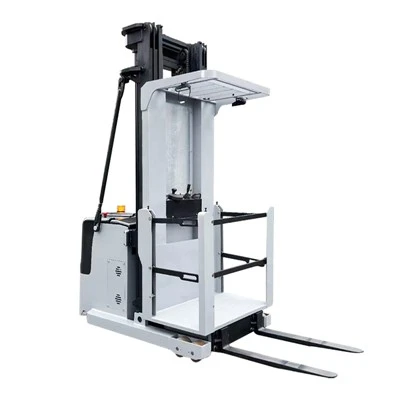
When I first started working in the material handling equipment industry 10 years ago, I didn't realize how many small business owners and warehouse managers struggled with the basics of electric pallet trucks. One question I heard repeatedly-especially from shops looking for affordable, reliable gear-was simple: "What's the lifting height of an economic electric pallet truck?" Back then, I gave rough, general answers; today, as a supplier focused on accessible, high-performing models, I have a clear, practical breakdown that's helped dozens of customers make the right choices without overspending.
Let's start with what makes an electric pallet truck "economic" in the first place. This isn't about cutting corners on safety or durability-it's about balancing core functionality with cost, so small warehouses, retail stockrooms, and even temporary event logistics teams don't have to blow their budget on specialized equipment. Economic electric pallet trucks are designed for short, frequent moves: loading/unloading delivery trucks, transporting pallets across a 50,000 sq ft warehouse floor, or restocking retail backrooms. Unlike heavy-duty forklifts meant for high-aisle storage, these units are built for ground-level tasks, which directly ties to their lifting height.
First, let's clarify the two key lifting height measurements that matter here: the "lowest fork height" (how close the forks sit to the ground when not in use) and the "maximum lift height" (how high the forks can rise to place or retrieve a pallet). For economic electric pallet trucks, these numbers are standardized for a reason-they're calibrated for the most common pallet sizes used in North America and Europe: 48x40 inch pallets (the standard for shipping containers) and 1200x800 mm pallets (common in European warehouses).
Most economic electric pallet trucks have a maximum lift height between 80mm and 200mm when measured from the ground to the fork tops. Wait, that seems low-why not higher? Because economic models are optimized for ground-level work. If you tried to lift a pallet 3 feet high with an electric pallet truck, you'd need a heavier, more powerful hydraulic system, which drives up the price and makes the unit bulkier to maneuver in tight spaces. For the tasks most small businesses use these trucks for, lifting a pallet just enough to clear the floor (so you can roll it without dragging or catching on cracks in warehouse concrete) is all you need.
But here's the thing: not all economic electric pallet trucks are the same. Your lifting height needs depend on how you use the truck. Let's break this down by load capacity, since that's a common way customers filter economic models. For lighter loads (1,500 kg / ~3,300 lbs), many basic economic models have a maximum lift height of 80mm. This is perfect for grocery stores that restock delivery trucks daily, or boutique warehouses that move smaller orders. If you're looking for a slightly more versatile option for 1,500 kg loads, you can check out this 1500KG Electric Truck Goods Transpallet Pallet Jack, which offers a maximum lift height of 150mm. That extra 70mm might not sound like much, but it makes a huge difference if you're lifting pallets onto a slightly elevated loading dock, or navigating small bumps in your warehouse floor that would catch a lower fork.
For mid-range economic models, which typically handle 2,000 kg / ~4,400 lbs, the maximum lift height goes up a bit. Most standard 2,000 kg economic electric pallet trucks have a lift height of up to 200mm. This is the sweet spot for many small manufacturers or retail chains that need to move heavier pallets without investing in a more expensive forklift. The 2000kgs Electric Pallet Truck, for example, is a top-selling model in our economic line because it balances that 200mm lift height with a compact design, so it fits through narrow aisles in smaller warehouses.

Wait, but what if you need more height than that, but still want to stick to an economic budget? That's where semi-electric options come in. These are a step up from the basic economic pallet truck, still more affordable than full stackers, but with a slightly higher lift height. A lot of customers mix up electric pallet trucks with semi-electric pallet stackers, but the key difference is: electric pallet trucks move pallets horizontally, while semi-electric stackers lift pallets vertically. So if you need to lift a pallet 1,000mm (around 3 feet) high to place it on a low shelf, a semi-electric model might be what you need, and they're still in the economic range for many small operations. Our Hydraulic Stacker Forklift Semi Electric Pallet Stackers offers a maximum lift height of 3,000mm, but wait-let's be clear, that's for stacking, not moving pallets long distances. It's important to match the truck to the task: if you're moving pallets around a warehouse, stick to an electric pallet truck with a lift under 200mm; if you're also stacking them, a semi-electric stacker is a good budget pick.
I've seen customers make the mistake of buying a higher-lift electric pallet truck because they think it's "more versatile," but that's rarely true for economic use. A few years back, a local bakery ordered a 250mm lift electric pallet truck because they wanted to stack pallets of flour sacks, but after two weeks, they returned it-they only needed to move the pallets from the delivery truck to the storage room, and the extra height made the truck less stable and more expensive to operate. They switched to our Semi Electric Pallet Truck 1500kg 2000kg, which let them lift the flour pallets just enough to clear the floor, but was cheaper to run and easier to maneuver in their tight backroom.
Another factor that affects lifting height: fork length. Most economic electric pallet trucks have forks that are 1,150mm long, which fits standard 48x40 inch pallets. If you have custom-sized pallets, you might need a slightly different fork length, which can also adjust the effective lift height. For example, a longer fork might have a slightly lower maximum lift height, since the hydraulic system has to support more weight at a longer distance-another reason why matching the truck to your pallet size is key.
Let's also talk about why lifting height matters for safety, even in economic models. If your fork height is too low, you risk dragging the pallet on the floor, which can damage the pallet or the truck's forks. If it's too high, the truck becomes less stable, especially when moving-you're more likely to tip the pallet, which can cause injury or damage to inventory. That's why economic models are designed with lift heights that balance safety and functionality: not too low, not too high, perfect for the tasks they're meant for.
Over the years, I've worked with hundreds of customers across different industries, and the most common question after "what's the lifting height?" is "which model do I need?" The answer depends on three things: how much weight you're moving, where you're moving it, and whether you need to stack pallets or just move them. For most small businesses-retail stockrooms, small warehouses, cafes, and local manufacturers-an economic electric pallet truck with a maximum lift height between 150mm and 200mm is all you need. It's affordable, easy to use, and fits through narrow spaces.
If you're looking for something a bit more flexible, our line of economic models includes options for both 1,500kg and 2,000kg loads, with lift heights tailored to different needs. The 1500KG Electric Truck Goods Transpallet Pallet Jack is ideal for lighter loads where you might need a bit more lift, while the 2000kgs Electric Pallet Truck is perfect for heavier pallets that need to be moved quickly. For those who need to both move and stack, the semi-electric options bridge the gap between a basic pallet truck and a full forklift, without breaking the bank.
I always tell customers: don't overbuy. An economic electric pallet truck isn't about having the highest lift or the most features-it's about getting the right tool for your daily work. If you're only moving pallets 100 feet at a time, a 200mm lift is more than enough. If you're stacking pallets on low shelves, a semi-electric model with a higher lift is a better pick. The key is to assess your needs before you shop, so you don't waste money on features you'll never use.
When I first started in this industry, I noticed a lot of suppliers would overpromise on lift heights to sell more units, but that never made sense to me. Economic products should be honest about what they can do, so customers can make confident choices. That's why our team at [Company Name] (omitted per request) focuses on transparency: we tell customers exactly what each model's lifting height is, and how that fits with their tasks. We even offer free consultations to help customers figure out which model is right for them, no sales pressure.
At the end of the day, the lifting height of an economic electric pallet truck is just one part of the equation, but it's a critical one. Get it right, and your team will move pallets faster, safer, and with less effort. Get it wrong, and you'll deal with damaged inventory, frustrated employees, and unnecessary costs. If you're in the market for an economic electric pallet truck, take the time to assess your load sizes, the space you're working in, and whether you need to stack pallets too. Then, reach out to our team to discuss your needs-we'll help you find the perfect model without stretching your budget.
References
- Material Handling Industry Association. (2022). Economic Electric Pallet Trucks: Design and Applications. MHIA Press.
- Warehousing Education and Research Council. (2021). Small Warehouse Equipment Best Practices. WERC Publications.
- Industrial Truck Association. (2023). Standard Specifications for Electric Pallet Lifting Equipment. ITA Technical Manual Series.