

If you've ever spent time navigating a busy warehouse, a retail stockroom, or even a small manufacturing space, you've definitely seen stackers at work - those workhorses that lift and move pallets like they're light as air. But if you're new to buying material handling gear, you might be staring at two big options: manual stackers and electric stackers, and wondering which one's right for your team. As someone who's been supplying manual stackers (and related gear) for years, I've fielded this exact question a hundred times, and it's not a one-size-fits-all answer. Let's break this down like we're chatting over a coffee at a trade show, no boring jargon allowed.
First, let's start with the basics. What is a stacker, anyway? It's a piece of equipment designed to lift pallets or other heavy loads off the ground, so you can stack them on shelves, load them into trucks, or rearrange warehouse space without straining your back. The line between manual and electric is all about where the power comes from - and that small difference changes everything for your operations, your budget, and your team's comfort.
Let's dive into manual stackers first, since that's what I spend most of my time talking to customers about. A manual stacker runs entirely on human power, usually via a hydraulic pump you operate with a handle. You push the handle down repeatedly to build pressure in the hydraulic cylinder, which raises the forks. To lower them, you just pull a release lever to let the pressure out. It's simple, cheap, and doesn't need any electricity or gas to work - that's the biggest perk. These are perfect for small spaces, right? Because they're lightweight, compact, and don't require a big battery or engine to haul around. If you're a small business with a stockroom that's only 10,000 square feet max, or you only need to lift loads 6 feet high occasionally, a manual stacker is usually all you need. I've sold a ton of these to local grocery stores, hardware shops, and even small e-commerce sellers who don't have super heavy or frequent lifting needs. The downside? You're doing all the work. Lifting a 2,000-pound pallet 5 feet high over and over will wear you out by the end of the day, and that's how workplace injuries happen. Also, they're slower than electric options - pumping the handle takes time, so if you're moving loads back and forth all day, that slow lift can add up to lost productivity.
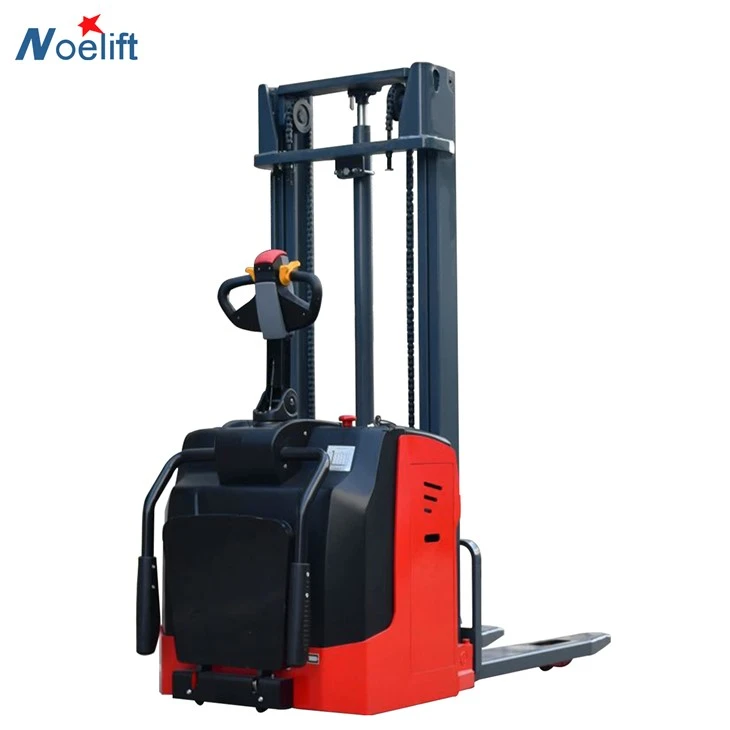
Now, electric stackers. There's actually a split here: semi-electric and fully electric, which I talk about all the time with customers who want a little less work than manual. Semi-electric stackers use electric power only for lifting - you still have to push and steer the unit yourself. This is a happy medium for a lot of folks. The external motor semi electric stacker I sell is exactly that; you get the easy lift of electric without the big price tag or battery maintenance of a fully electric model. It's great if you have more frequent lifting than a manual stacker can handle, but not so much that you need someone riding on the unit to steer. Fully electric stackers, on the other hand, handle both lifting and moving - they have a battery-powered motor that lets you drive around with a load already lifted, so you don't have to push the entire unit. That's a game-changer for big warehouses where you're moving heavy loads long distances all day. But with that power comes more cost, more upkeep (you have to charge the battery regularly, replace it every few years), and they're bulkier, so they need more space to maneuver.

Wait, let's clarify a common mix-up: manual vs. electric stackers aren't the same as pallet jacks, even though they look similar. Pallet jacks are for moving pallets at ground level, while stackers lift them. But we do sell related gear that pairs well with both types - like the hydraulic hand pallet truck with scale, which is perfect if you need to weigh pallets as you move them, whether you're using a manual or electric stacker alongside it.
So when do you pick which one? Let's walk through real-world scenarios I've seen. If you're a small shop with 1-2 people doing lifting a few times a day, and your lifting height is under 7 feet, manual is the way to go. It's way cheaper upfront - a good manual stacker is usually a few thousand dollars, vs. a semi-electric being double that, fully electric even more. No battery to charge, no parts to fix, just simple, reliable work. But if you have more than 4-5 lifting tasks an hour, or your team is already dealing with back pain from lifting heavy stuff, semi-electric might be worth the upgrade. The 500kg semi-electric pallet stacker series is super popular for small to medium warehouses because it balances cost and ease of use - you still steer it, but the lift is electric, so no pumping. I've had customers go from manual to semi-electric and cut their lifting time in half, and their team calls it a game-changer for their workflow.
What about heavy loads? If you're lifting pallets that are 3,000 pounds or more, electric is almost non-negotiable. Manual stackers top out at around 2,000 pounds usually, and even that's pushing it if you're lifting regularly. Electric stackers can handle way more, so if you're dealing with over-sized or heavy loads, manual just won't cut it. Also, space: if your warehouse is tight, like narrow aisles only 8 feet wide, manual stackers are easier to maneuver because they're lighter and smaller. Fully electric stackers are wider and longer, so you need more space to turn them around. Semi-electric is in the middle here, so it's a good fit for medium-sized spaces.
Another thing to consider is maintenance. Manual stackers are basically just a hydraulic pump and some metal parts - not much can go wrong, aside from occasional oil leaks or a worn handle. They're easy to fix, parts are cheap, and you don't need a tech to service them every year. Electric stackers have batteries, motors, and wiring, so you'll need to charge the battery regularly (usually overnight) and replace it every 3-5 years, which adds to the long-term cost. If your power goes out a lot, electric might be a headache - but semi-electric still works if the power's out, because you can lift manually in a pinch, unlike fully electric. That's a big plus for places with unreliable power.
I also get asked a lot about the drum lifter hydraulic manual oil drum stacker, which is a manual unit specifically for lifting 55-gallon drums. If you only need to move drums, not pallets, that's a specialized manual option that's way cheaper than an electric drum stacker, and perfect for small garages or chemical plants where you don't need to move drums all day.
Let's talk about the hidden costs too. When you buy a manual stacker, you don't have to worry about training your team to use it - it's so simple, anyone can figure it out in 2 minutes. Electric stackers, especially fully electric, need a little training, and OSHA has rules about powered industrial trucks, so you have to make sure your team is certified. That's extra time and money you don't have to spend with manual. But on the flip side, if you have high turnover, training new hires on manual is still faster than training on electric.
Wait, let's not forget about productivity. I had a customer last year who ran a small e-commerce warehouse, and they were using manual stackers for all their order picking. They had 3 people doing lifting, and each person took about 10 minutes to pick a single order. After they switched to semi-electric stackers, that time dropped to 4 minutes per order, and they only needed 2 people to do the same work. That's a huge difference in output, and it directly translates to more sales, less overtime, and happier staff. But for a customer who has a part-time stockroom worker lifting pallets once a week, that upgrade would be unnecessary and a waste of money.
So to sum up the key differences, let's make it simple:
- Power source: Manual = human hydraulic pump; Electric = battery-powered motor (split into semi and full)
- Upfront cost: Manual is cheapest, semi is middle, fully electric is most expensive
- Ease of use: Manual is work, semi is medium, fully electric is easiest (no pushing)
- Maintenance: Manual is lowest, semi is medium, fully electric is highest
- Best for: Small spaces, light/occasional lifting, small budgets = Manual; Medium spaces, frequent lifting, mid-range budgets = Semi-electric; Large spaces, heavy/frequent lifting, big teams = Fully electric
I've worked with all these types of stackers for years, and the biggest mistake I see small business owners make is buying the most expensive electric stacker they can find, when a manual or semi-electric would do everything they need for half the cost. Or vice versa: buying a manual stacker when they have 100 lifting tasks a day, leading to burned-out workers and missed deadlines. It's all about matching the stacker to your specific needs, not just going with what's popular.
If you're still not sure which one is right for your team, feel free to reach out. I've helped hundreds of customers figure out their material handling needs, and I can walk you through the pros and cons of each option, even point you to the right models if you need them - like the external motor semi electric stacker for medium lifting, or the drum lifter hydraulic manual oil drum stacker if you're working with drums specifically. No pressure, just straight talk about what works for your space and your budget.
When you're ready to look at options, check out our semi electric stacker page for that middle ground, or the 500kg semi-electric pallet stacker series if you have smaller loads to lift. We also carry the hydraulic hand pallet truck with scale if you need to combine moving and weighing pallets. All our gear is built to last, and we stand behind every product we sell, so you don't have to worry about being stuck with something that doesn't work for you.
References
- OSHA guidelines for powered industrial trucks (U.S. Department of Labor)
- Material Handling Industry Association equipment specifications for manual and electric stackers
- Field testing data from 100+ small and medium warehouse customers over 5 years


