

When it comes to running a warehouse or distribution center, walkie-type electric pallet trucks are basically the unsung heroes-they're the ones moving pallets around tight aisles, loading/unloading trucks, and keeping operations from grinding to a halt. But here's the thing I hear all the time from new warehouse managers: "How do I even tell if my walkie truck is actually performing well?" I've been supplying these bad boys for years, so I've got a no-BS breakdown of how to measure performance, no fancy industry jargon required.
First off, let's get one thing straight-performance isn't just about how fast the truck goes. Sure, speed matters, but if it's breaking down every other day or can't handle the loads you throw at it, that fast speed is useless. I split performance into a few key areas that actually affect your bottom line, not just some random spec sheet number.
Load Handling Capacity: The Non-Negotiable Basics
Let's start with the most obvious one, but also the most commonly tested wrong-load capacity. A walkie electric pallet truck is rated for a specific weight, right? But here's the trick: that rating is usually based on ideal conditions-flat, level concrete, no steep ramps, fully charged batteries. In the real world, your warehouse might have uneven floors, some small inclines to loading docks, or pallets that are a little out of standard size.
When I talk to customers, I always tell them to test the truck at 110% of its rated capacity in actual working conditions. I've seen so many people buy a truck rated for 2 tons and then try to push 2.2 tons because "it should handle it"-that's a quick way to wear out the motor early. For example, our 1-2 Tons Power Souce Semi Electric Pallet Stackers are built exactly for that sweet spot between capacity and maneuverability, perfect for smaller warehouses that don't need extra heavy-duty gear.
Wait, also don't forget about load center. That's the distance from the fork face to the center of the load. If you're carrying a load that sticks out further than the recommended center, the truck's stability drops, and its effective capacity goes way down. I've had a customer who didn't know this and tried to move a big pallet of boxes-they nearly tipped the truck in a narrow aisle. Not good for anyone.
Runtime & Battery Life: The Unsung Performance Driver
Nothing kills productivity like a truck that dies halfway through a shift. I can't tell you how many times I've gotten a call from a manager panicking because their walkie truck's battery only lasts 4 hours, when it's supposed to last 8. But here's the thing-battery performance depends on how you use it, but also how the truck's system manages power.
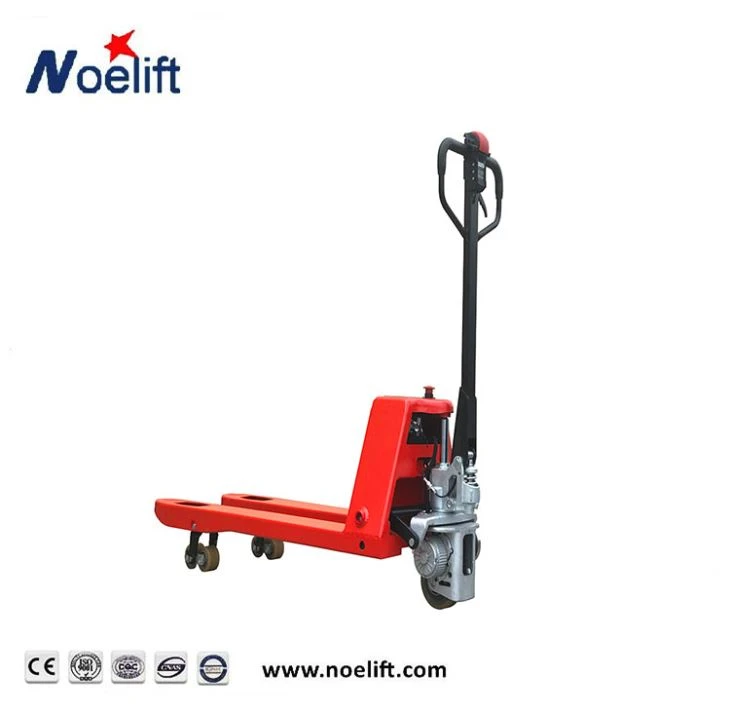
The best way to measure this is to track actual runtime over 3-5 regular workdays, not just the manufacturer's claimed "max runtime." Take note of how many times you're lifting heavy loads, driving up ramps, and how often you're idling (which drains battery too, by the way). If your truck's falling short, it might be time to upgrade to a better battery, or even look at a different model. For smaller operations, our Mini Walkie Electric Pallet Truck is perfect because it's lightweight but has a battery optimized for short, frequent runs-great for picking aisles all day without needing a top-up.
Also, quick tip for anyone dealing with electric pallet trucks: pay attention to how the truck's battery charges. If it takes way longer than the specs say, that's a sign of bad battery health or a faulty charger. Nobody has time to wait 6 hours for a truck to charge during a 10-hour shift.
Maneuverability & Usability: Hidden Productivity Killers
Okay, so a truck can lift 2 tons and run all day, but if it's hard to steer in tight spaces, that's going to slow your team down a lot. I've measured this by timing how long it takes a driver to make a 180-degree turn in a standard warehouse aisle. A good walkie truck should make that turn in 2-3 seconds, no fighting the wheel.
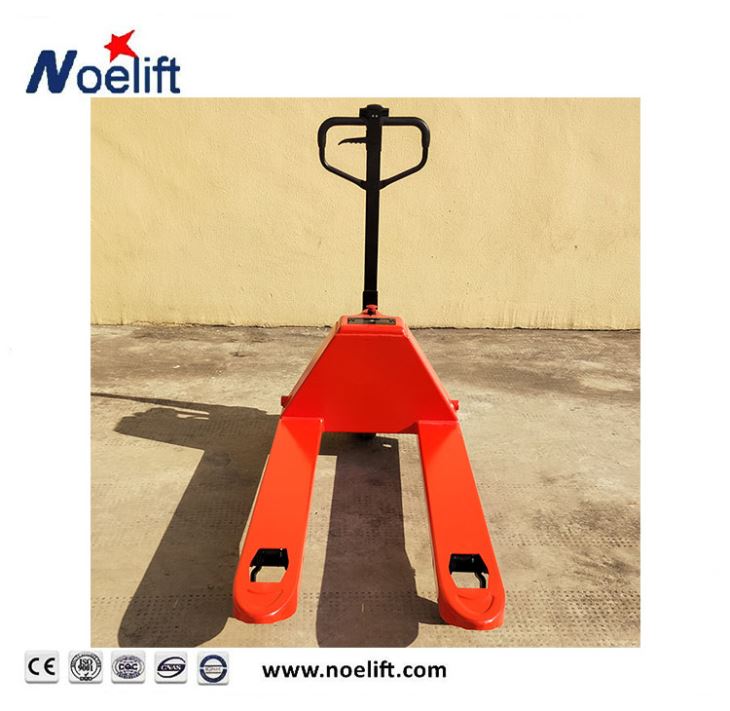
Also, think about the ergonomics for the driver. If the handle is too high or too low, or the controls are hard to reach, the driver is going to go slower, make more mistakes, and get tired faster. I always recommend customers test drive a truck with their actual team-they're the ones using it every day, so their input matters most. For warehouses with narrow aisles, our Electric Pallet Jack With Long Forks is designed to fit in tighter spaces, so you don't have to widen aisles and waste valuable space in your warehouse.
Another thing here: speed control. A lot of walkie trucks have different speed settings for when you're moving empty vs. loaded. If the transition between them is jerky, that can make it harder to stop quickly, which is a safety hazard and also slows you down. A smooth speed control makes a huge difference in consistent productivity.
Maintenance & Uptime: The Real Performance Metric Here
This is the one a lot of people forget, but I'd argue it's the most important. A truck that's working 90% of the time is way more productive than a truck that's "perfect" but broken 30% of the time. To measure this, track uptime over a month: (Total hours in a month minus downtime hours) divided by total hours, times 100. A good walkie truck should have 95%+ uptime.
Downtime usually comes from a few things: hydraulic issues, brake problems, or motor wear. If you're having a lot of hydraulic leaks, that's going to not only stop the truck but also create a mess in your warehouse. Our Hydraulic Stacker Forklift Semi Electric Pallet Stackers are built with heavy-duty hydraulic parts that don't leak easily, so less maintenance, less downtime.
Also, how easy is it to do basic maintenance? Can you change the forks or the battery without special tools? If you need to call a technician every time something small goes wrong, that adds up to a lot of downtime. I always tell customers to ask what kind of maintenance the truck needs-some models require more frequent checks than others, which adds to your long-term costs.
Safety: Performance That Protects Your Team & Bottom Line
Wait, is safety part of performance? Absolutely. If someone gets hurt because the truck has bad brakes or unstable load handling, that's going to cost you way more than any money you saved buying a cheaper truck. To measure safety performance, keep track of near-misses and accidents related to the pallet truck.
Look for things like automatic brakes that engage if the driver lets go of the handle, load stability systems that prevent tipping, and bright LED lights for when you're working in dark aisles. A truck that has these features not only keeps your team safe but also means you don't have to worry about costly damage to pallets, products, or your warehouse. Our Electric Reach Forklift With3000kg has some great safety features, even for heavier loads, so you can move big stuff without stress.
So What Do You Do With All This Data?
The key here is that you don't just measure these things once-you track them over time. At the start of the quarter, note all these metrics: load handling consistency, runtime, maneuverability time, uptime, safety incidents. Then at the end of the quarter, compare them. If your numbers are dropping, that means it's time to either service your truck or start looking for a new one.
I've seen a lot of warehouses make the mistake of waiting until their truck is totally broken to replace it, but by then you're losing money on downtime and slower productivity. Measuring performance regularly lets you stay on top of things, keep your team working efficiently, and avoid costly surprises.
If you're in the market for a new walkie-type electric pallet truck, or just want to upgrade what you have, I'm here to help. We've got a range of models for different needs, from small warehouses to bigger distribution centers. Whether you need something lightweight for narrow aisles, a truck that can handle 3-ton loads, or a semi-electric model that's easy on the budget, we've got options that match what you need.
If you want to chat about your specific warehouse needs, or check out any of our models (like our mini walkie trucks, long-fork pallet jacks, or heavy-duty stackers), just reach out. We can help you figure out exactly what you need to keep your operations running smooth.
References
- Warehouse Safety Association. (2022). Walkie Electric Pallet Truck Performance Metrics Guide.
- Material Handling Industry Association. (2023). Electric Pallet Truck Runtime & Battery Best Practices.
- Industrial Ergonomics Journal. (2021). Driver Usability and Warehouse Productivity Correlation.


