

I've spent the last 12 years working in the forklift attachment industry, starting on the shop floor assembling clamps before moving into sales and client support, so I hear this question constantly: Can forklift attachment block clamps be used for delicate blocks? It's not a simple yes or no answer-so let's break this down with real-world scenarios, science, and the kind of insights I share with every new customer who calls our team.
First, let's get clear on what a standard forklift attachment block clamp is. From day one, our team at [noelift] has specialized in this equipment, and our Forklift Attachment Block Clamps are designed with two core functions: grip capacity and stability for heavy, dense loads like concrete blocks, cinder blocks, or natural stone blocks. They work by applying even, adjustable clamping pressure around the sides of the block, eliminating the need for forks that can puncture or scratch surfaces. But here's the catch: not all delicate blocks are the same, and not all block clamps are built to handle fragility.
Let's define what "delicate blocks" means in this context. We're talking about items that are easily damaged by excessive pressure, impact, or uneven force. That includes things like thin concrete masonry units (CMUs) with lightweight cores, natural stone blocks with soft, porous surfaces (like sandstone or limestone), precast decorative blocks with sharp, vulnerable edges, and even interlocking landscape blocks that crack if gripped too tightly. The key here is fragility-can the material withstand the clamping force, or does it deform, crack, or chip under pressure?
When a customer first asks if our block clamps work for these delicate loads, my first question is: What's the block made of, and how delicate is it? A common mistake I see is people using a standard heavy-duty block clamp for every load, assuming the adjustable pressure setting is enough. And to be clear-it can be enough-if you adjust the pressure correctly, and sometimes you might even consider pairing it with a different attachment if the load is extremely fragile. For example, if you're moving fragile brick-sized blocks with a smooth surface, a Forklift Attachment Paper Roll Clamps might actually be a better fit, because they're designed to apply consistent, low-pressure force around curved surfaces. But that's a side note-let's focus on block clamps first.
The science of clamp pressure is the biggest factor here. Every forklift attachment block clamp has a pressure adjustment system, usually controlled by the forklift's hydraulic valve. When you lower the pressure, the clamp's jaws apply a gentler, wider distribution of force across the block's surface. But how do you know what setting is right? I always tell customers to test on a scrap block first. Take a spare of the same delicate block you're moving, set the clamp to the lowest pressure that still holds the block securely, lift it 6-12 inches off the ground, and move it 10-15 feet. If it doesn't slip, doesn't crack, and leaves no marks, you're good to go.
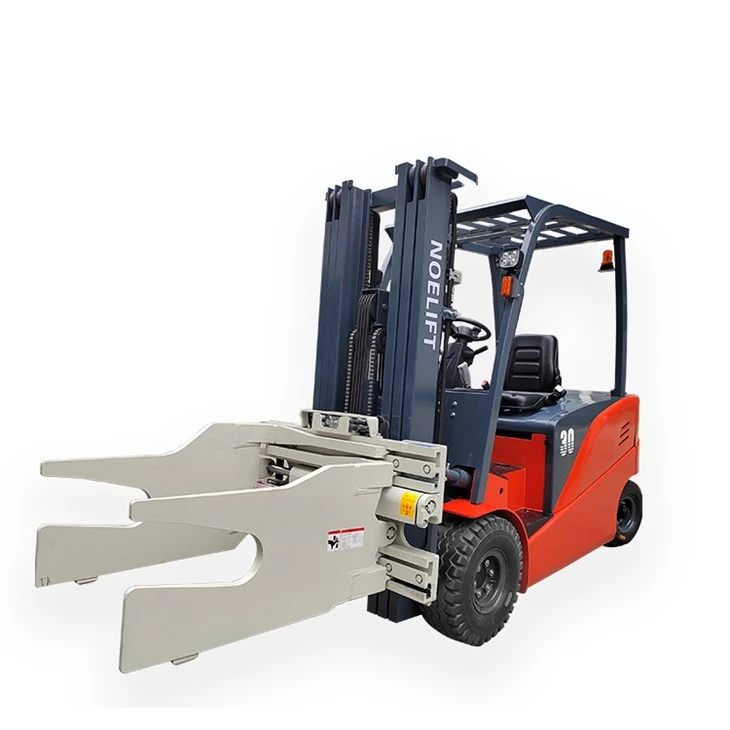
I recently worked with a landscaping company that was struggling with delicate natural stone blocks for a backyard retaining wall. They'd been using standard forklift forks, which were puncturing the soft limestone, and they tried a competitor's block clamp that applied too much pressure, chipping the edges. When they reached out, we walked through the testing process. First, we adjusted our Forklift Attachment Block Clamps to the lowest hydraulic pressure setting, tested on a scrap limestone block, and it worked perfectly. We added a layer of rubber padding to the clamp jaws (a free add-on we offer for delicate loads) to distribute the force even more evenly, and they've reduced their damage rate from 12% to less than 1% in the three years since we made that switch. That's a real win-proof that block clamps can work for delicate blocks, as long as you set them up right.
But there are limits. Let's talk about when a standard block clamp isn't the right choice for delicate blocks. If you're moving extremely fragile, low-density blocks, like lightweight foam concrete blocks used for insulation walls, or thin decorative blocks that crack under minimal force, block clamps might not be your best option. In those cases, we often recommend alternative attachments. For example, for lightweight, fragile construction blocks, a Bale Clamps Newspaper Clip can be adjusted to apply very light, even pressure around the block's edges without deforming it. For loads that need to be lifted and turned, like decorative stone blocks that need to be flipped for inspection, a Forklift Attachment Forklift Rotators paired with a low-pressure block clamp gives extra control to avoid impact damage during rotation. Even something like a Forklift Man Basket might be used if you're moving individual small, fragile blocks by hand, since it allows operators to lift and place them directly without clamping pressure.
Another common concern is surface damage. Delicate blocks often have finished surfaces, like polished stone or painted precast blocks, that scratch easily. The good news is that most block clamp jaws can be fitted with protective padding-we use closed-cell rubber or UHMW (ultra-high-molecular-weight polyethylene) padding for our clamps, which is soft enough to prevent scratches but durable enough to hold the load. For extremely smooth or porous blocks, we also recommend adding a layer of release paper between the clamp and the block, which eliminates friction marks entirely. I had a customer who installs high-end decorative stone facades tell us that after adding rubber padding to our block clamps, they no longer get returned units with scratch marks-something they were dealing with for years with forks and other attachments.
Misuse is the other big issue I see. A lot of people assume that just because an attachment is called a "block clamp," it's only for heavy blocks. That's not true-our Forklift Attachment Block Clamps are built with variable capacity, so they work for blocks weighing as little as 50 pounds and as much as 5,000 pounds. The mistake comes from operators cranking up the pressure to the maximum, even for light delicate blocks, because they think "more pressure equals a better hold." That's the opposite of what you want. For light delicate blocks, you want the minimum pressure that keeps the block from slipping-too much pressure squeezes the block unevenly, leading to cracks or edge chips.
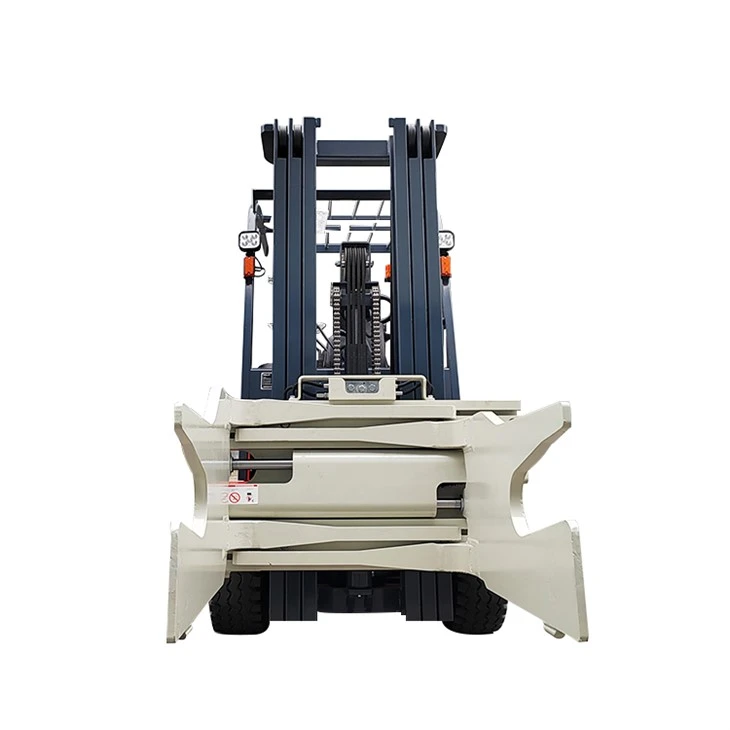
I also want to mention load size. Delicate blocks that are smaller than the clamp's minimum jaw opening can be tricky. If the jaws can't fully enclose the block, the pressure will be focused on a tiny area, which can cause damage. For these cases, we often advise using a different attachment, like a fork with a soft cover, or a specialty clamp designed for small loads. But for blocks that fit within the clamp's jaw range (most standard block clamps work for blocks 8 to 48 inches wide), they work perfectly with the right pressure adjustment.
Let's wrap this up with some practical takeaways, because that's what our customers care about most. If you're wondering if forklift attachment block clamps can be used for delicate blocks:
- Match the clamp to the load: Not all clamps are the same-our adjustable block clamps are better suited than heavy-duty fixed clamps for fragile loads.
- Adjust pressure for fragility: Start low, test on scrap, only increase pressure enough to prevent slipping.
- Add padding: Protective jaw covers eliminate scratches and even out pressure.
- Know when to switch attachments: For extremely fragile, low-density blocks, consider alternatives like paper roll clamps, bale clamps, or rotators to avoid damage.
- Test first: Never use a new clamp setting on production loads-test on a spare block to catch issues before they become costly.
I've been in this industry long enough to know that there's no one-size-fits-all answer, but when it comes to delicate blocks, our Forklift Attachment Block Clamps are a viable, cost-effective option when used correctly. They reduce the need for manual handling, speed up loading and unloading times, and cut down on damage rates-if you take the time to adjust them properly.
If you're currently dealing with fragile block damage in your operations, or you're not sure which attachment is right for your needs, our team is here to help. We don't just sell attachments-we work with you to assess your specific loads, provide testing guidance, and customize solutions to fit your business. Whether you need more information about block clamps, or you want to explore alternatives like paper roll clamps, bale clamps, man baskets, or rotators, reach out to our team to discuss your requirements. We're happy to walk through options, provide product specs, and help you find the best way to move your delicate blocks efficiently and without damage.
References
- Material Handling Industry Association. (2022). Forklift Attachment Application Guide: Selecting Equipment for Fragile Loads.
- National Precast Concrete Association. (2021). Best Practices for Handling Delicate Precast Units with Forklift Attachments.
- Occupational Safety and Health Administration (OSHA). (2020). Hydraulic Pressure Safety Guidelines for Industrial Lifting Attachments.
- Construction Equipment Association. (2023). Soft Clamping Technologies for Fragile Construction Materials.


