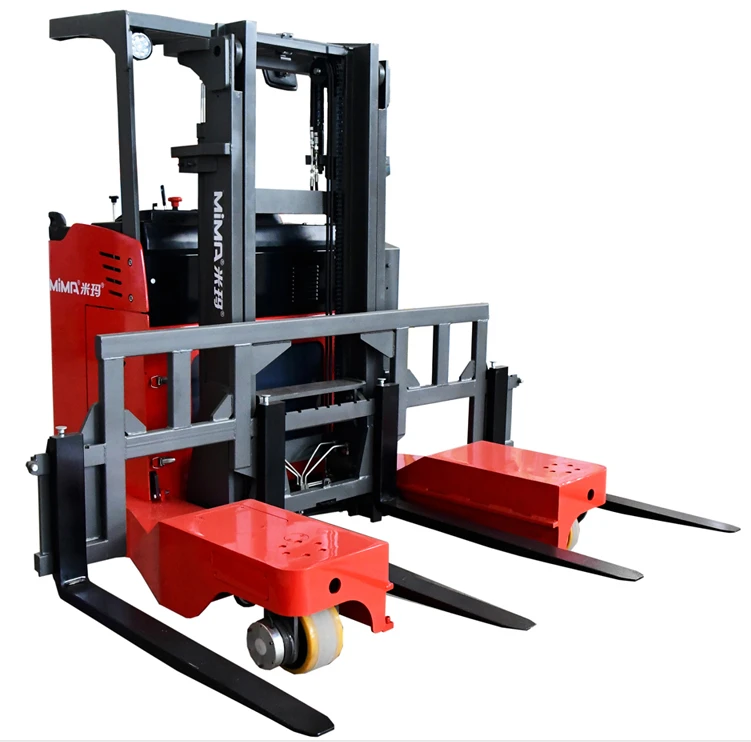
A few months ago, I got a frantic call from a long-time client who runs a cold storage distribution center in the Pacific Northwest. The facility's loading docks flood regularly during peak winter rains, and their old sit-down electric reach truck had just died mid-shift-trapping a pallets of frozen vegetables that needed to hit shelves first thing. "I thought electric trucks were totally out of the question in wet areas," he said, voice tight with frustration. That call made me pause: I've been selling sit-type electric reach trucks for over a decade, and I'd field this exact question a hundred times, but I'd never broken down the answer clearly enough for people like him. Today, I'm walking through the science behind whether a sit-type electric reach truck can work in wet environments, the limits you need to watch for, and how to choose the right model if your space sees regular moisture.
First, let's get one thing straight: sit-type electric reach trucks aren't water-proof, but they are water-resistant-at least most of the ones we build these days are. The confusion comes from mixing up water-resistant (designed to hold off splashes, light rain, or occasional flooding) with water-proof (sealed for full submersion, which isn't necessary for most warehouse work). The key here is the Ingress Protection (IP) rating, a global standard that tells you how well a machine's electrical and mechanical parts hold up against solid particles and water. For context, the average sit-type electric reach truck we sell carries an IP rating of IP65 for the main control panel, drive motor, and hydraulic system. That means it's protected against low-pressure water jets from any direction-exactly what you'd get from a rainy loading dock, a spill of cleaning solution, or a small, temporary puddle. It's not built to sit fully submerged in an inch of water for hours, but that's a rare scenario in most warehouses anyway.
My client's problem wasn't that his old truck was electric-it was that it was a low-end model from a decade ago with a terrible IP rating. Back then, many cheap electric trucks used open wiring harnesses and unprotected circuit boards that shorted out if they got even lightly damp. Modern designs changed all that. We wrap our wiring in reinforced, oil- and water-resistant thermoplastic, seal circuit boards in conformal coating that repels moisture, and use hermetically sealed motors that don't let water seep in past the spindle. For context, the 1.5ton Semi Electric Pallet Truck we carry, a close cousin to our sit-down reach line, has an identical IP65 rating for its electrical system-we tested it last year by spraying it with a constant fine mist for 24 hours straight, and it worked perfectly through the whole test. That same level of protection applies to our sit-type models, too, which makes them suitable for anything from rain-soaked loading docks to regular mopping of warehouse floors.
But before you run out and buy the first sit-type electric reach truck you see, there are hard limits to wet environments that no IP rating can overcome. Let's start with traction. Wet concrete is slippery, period. Even the best truck's rubber drive wheels can't grip a slick surface the way dry rubber can, which means you'll want to adjust how you use the truck to avoid hazards. Most operators make the mistake of going full speed through wet areas, but that's a no-no: wet surfaces add 20-30% more stopping distance, per OSHA data on warehouse vehicle safety. If you're moving pallets through a damp space, keep speeds under 5 mph, avoid sudden turns that can cause the truck to slide, and slow down when approaching ramps or uneven floors-those are the spots where hydroplaning is most likely.
Another big risk is corrosion, especially if the moisture isn't just rain or tap water. If your facility stores chemicals, uses harsh cleaning solutions that are acidic or salty, or is in a coastal area where salt air is constant, you have to pay extra attention to metal components. Even sealed parts can develop tiny gaps over time, and salt or chemical residue is far more corrosive than plain water. That's why our team recommends a regular maintenance schedule for trucks used in wet or corrosive environments: every two weeks, wipe down the undercarriage, mast, and chain with a mild, non-abrasive cleaner, and lubricate moving parts with a dry, corrosion-resistant lube that won't attract moisture. For customers operating in coastal warehouses, we also offer optional zinc plating for metal components that adds an extra layer of protection against salt damage.
Now, let's talk about what types of wet environments a sit-type electric reach truck actually works best in, and which models we recommend for those spaces. Not all wet areas are the same: a loading dock that gets splashed by rain is very different from a cold storage facility with high humidity and occasional floor condensation, or a food processing plant that uses high-pressure hoses to clean floors nightly.
For light to moderate wet environments-think a loading dock that's occasionally exposed to rain, or a warehouse that gets mopped once a day-our standard sit-type electric reach trucks work perfectly. The Reach Truck 7.2m For Euro Pallet Pallet is a great example here: it has the same IP65 rating across all electrical and hydraulic components, a low center of gravity that helps prevent tipping on slightly uneven wet floors, and a quick-charge battery that can handle the occasional dampness of being parked in a semi-outdoor dock area. We've sold dozens of these to e-commerce warehouses in the Southeast, where summer thunderstorms leave loading docks damp multiple times a week, and we've only had one service call related to water damage in the last three years-and that was for a customer who left their truck parked in a foot-deep puddle overnight, not just regular dock splashes.
For environments with more consistent moisture, like cold storage facilities or food grade warehouses, you'll want to look for models built with extra durability. Our 24V Electric Reach Truck For Double-deck Forklift is a popular choice here: it has an IP67 rating for the battery compartment, meaning it can withstand temporary submersion (up to three feet for 30 minutes) if a floor flood does happen, and all of its seals are rated for low temperatures, which prevent condensation buildup inside the unit when moving between warm office areas and cold storage floors. We also work with food processing clients who need trucks that can handle high-pressure hosing; our Single Scissor ELECTRIC REACH TRUCK line has food-grade, corrosion-resistant coatings on all surfaces, so they can be sprayed down with sanitizers without damaging the metal or wiring.
If your warehouse is dealing with heavy, frequent flooding-like a waterfront facility or a loading dock that regularly has standing water-we recommend a slightly different approach. Sit-type electric reach trucks still work here, but you'll want to pick a model with a raised battery compartment and reinforced seals. Our Warehouse Forklift Equipment 2tons Capacity Double Deep Reach Truck is designed for just this scenario: its battery and control modules are mounted 18 inches off the ground, so even if a dock floods with 12 inches of water, the electrical parts stay dry, and its heavy-duty tires are designed to grip muddy or slick wet concrete. We also add a custom drainage system for the mast, which prevents water from pooling inside the lift mechanism when the truck is driven through deep puddles.
Of course, even with all these features, there are some scenarios where a sit-type electric reach truck isn't the best choice. If you're working in an area with constant submersion-like loading ships directly from a dock with 6 inches of standing water-you'll want to look at specialized rough-terrain forklifts, not a sit-type electric model. If you're dealing with extremely corrosive chemicals, even our most protected trucks will need daily maintenance to prevent damage, and sometimes a different power source (like propane) might be more practical, but that's a rare case. For the vast majority of warehouses with wet loading docks, regular mopping, or high humidity, a sit-type electric reach truck is not only safe-it's often more efficient and cheaper to operate than a gas or diesel model.
Wait, let's circle back to my original cold storage client, the one who called that rainy day a few months back. After I walked him through this information, he tested one of our standard sit-type electric reach trucks in his loading dock for two weeks. He put it through rain, spilled cleaning solution, and even had a small puddle from a broken pipe under it for an hour. When he called me at the end of the trial, he said it worked flawlessly-no shorting, no slipping, no issues with the lift. He ordered two trucks that week, and we've since added three more of our 7.2m Euro pallet reach trucks to his fleet. That's the thing about electric equipment: people have a built-in bias that they can't handle harsh conditions, but modern engineering has closed that gap a lot.
I want to be clear here: this isn't a "one-size-fits-all" answer. The key is matching your truck to the exact conditions of your space. If you're in a light wet environment, save money with a standard IP65 rated model. If you're in a cold or food processing space, go for the higher IP rating and corrosion-resistant parts. If you're dealing with frequent flooding, pick a model with elevated electrical components. The worst mistake you can make is assuming all sit-type electric reach trucks are the same-just like you wouldn't use a lawn mower for heavy construction, you wouldn't use a basic warehouse truck for a water-intensive environment without doing your research.
If you're currently weighing whether a sit-type electric reach truck is right for your wet space, I recommend reaching out. Our team has over a decade of experience working with warehouses, distribution centers, and manufacturing facilities across industries, and we can help you evaluate your space's moisture levels, choose the right model, and set up a maintenance schedule to keep your truck running for years, even in damp conditions. We don't just sell trucks-we help you find the equipment that solves your specific problems, whether that's avoiding downtime from water damage, staying compliant with safety regulations, or keeping operating costs low.

Don't let fear of wet environments push you toward more expensive, less efficient gas or diesel trucks. Sit-type electric reach trucks are versatile, reliable, and more than capable of handling the demands of most wet workspaces-you just need to pick the right one for your needs. To learn more about our full line of electric reach trucks, and to find the right model for your environment, get in touch with our team today. We're here to walk you through every detail, from IP ratings to maintenance plans, so you can make a confident choice for your warehouse.
References
- Occupational Safety and Health Administration (OSHA). (2022). Forklift Safety Standards for Wet Warehouse Environments. U.S. Department of Labor.
- International Electrotechnical Commission (IEC). (2021). Ingress Protection (IP) Rating Standards for Industrial Equipment. IEC 60529.
- National Institute for Occupational Safety and Health (NIOSH). (2020). Corrosion Prevention Guidelines for Industrial Lift Equipment in Moist Environments. CDC.
- Material Handling Industry (MHI). (2023). Electric Reach Truck Performance in Humid and Wet Warehouse Conditions. MHI Technology Report.