

For many businesses, forklifts are essential tools that help facilitate the efficient transportation of products, parts, supplies, and other materials. But by their very nature, forklifts are potentially dangerous. According to the U.S. Occupational Safety and Health Administration, over 96,000 people are injured in forklift-related accidents each year. Considering there are approximately 855,900 forklifts in the United States, this means that approximately 1 in 10 will be involved in some kind of injury each year.
So, what makes forklifts one of the most potentially dangerous pieces of equipment in the workplace? There are many different factors at play.
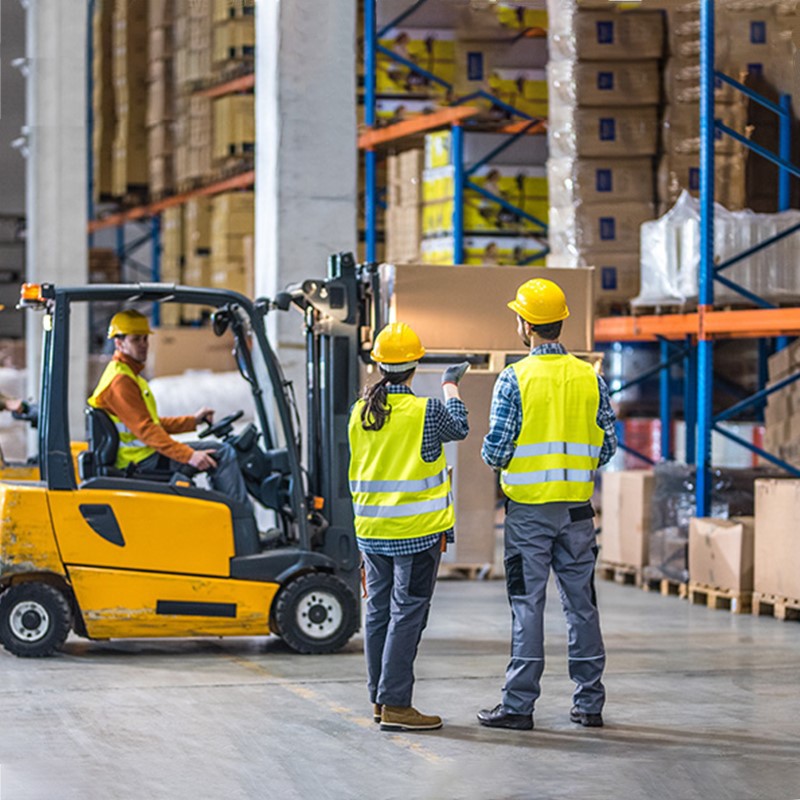
1. Forklift Weight
Most forklifts can lift thousands of pounds with their mast and fork assembly. They have high lifting capacities because a counterweight is typically located behind the driver's seat, creating a fulcrum cantilever system.
The combination of the counterweight and the forklift's other equipment means they are very heavy, often weighing 9,000 pounds (around 4.5 tons) or more, or about three times the weight of a typical passenger car.
The rest is simple physics of energy conversion. When a heavy vehicle collides with something lighter, such as a person, even a minor collision can result in serious injury.
2. Forklift Speed
Another consideration is forklift speed. For such a heavy vehicle, many forklifts can travel relatively quickly, typically at around 18 mph (about 30 km/h). While this is significantly slower than a car or truck, speed can be fatal in this situation when you consider the combined weight of the forklift and its payload, as well as the fact that the driver can't always see directly in front or behind the vehicle.
Furthermore, instead of traveling on open roads like cars, where the driver can see for miles ahead, forklifts typically operate in confined warehouses or docks, where there are numerous blind corners, high racks, and other obstructions that prevent a clear view.
3. Forklift Design
By design, many forklifts only have front brakes. While this makes them safer to park on ramps and other uneven surfaces, these brakes also make it difficult for the driver to stop in a straight line: that is, the rear end of the vehicle swings.
Forklifts are designed to be rear-balanced. Due to their heavy counterweights, they carry significant momentum when moving forward or backward, further inhibiting their ability to stop promptly.
Many forklifts use their rear wheels (or single wheels, depending on the model) for steering. This enables them to make sharp turns, but can also cause the vehicle's rear end to swing, increasing the chance of a collision, especially with inexperienced operators. This is particularly important in contrast to cars: rear-wheel steering.

While forklifts are potentially dangerous, they provide a safe and reliable means of transportation when operators are properly trained and work rules are clearly explained and universally enforced. Furthermore, with technological advancements, more and more active safety technologies are being developed to help make forklift operations safer.


