

In modern warehousing and logistics, diesel forklifts and electric forklifts are the two most common types. Choosing between them often depends on your operating environment, operational requirements, and long-term operating costs. Below, we will comprehensively analyze these two types of forklifts from three perspectives: features, advantages and disadvantages, and application scenarios.
Diesel Forklift Features and Operating Environment
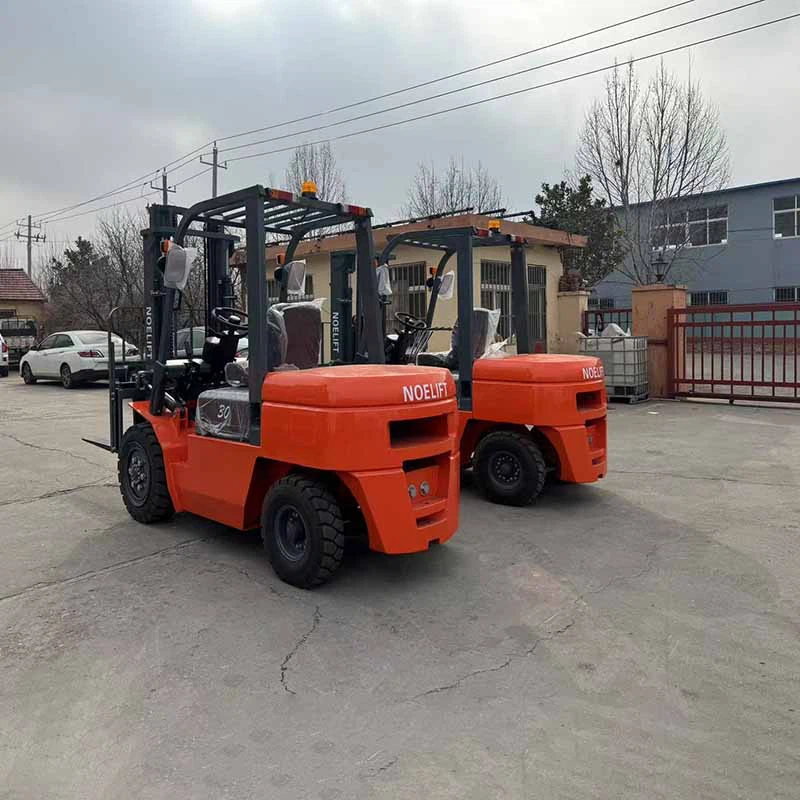
Diesel forklifts are powered by internal combustion engines, offering powerful power and high stability, making them particularly suitable for heavy loads and prolonged outdoor operations. Compared to internal combustion forklifts, diesel engines offer high low-speed torque, are less prone to stalling, and offer lower fuel costs, making them ideal for high-intensity environments.
Advantages:
- High horsepower and stable power output;
- Adaptable to complex terrain, suitable for all-terrain diesel forklifts;
- Easy to refuel, eliminating the need for long recharging times.
Disadvantages:
- Low noise, and exhaust emissions pollute the environment;
- The equipment is heavy and has a large turning radius, typically requiring a passageway of more than 4 meters;
- Indoor use poses safety risks, so many customers ask: Can diesel forklifts be used indoors? The answer is theoretically possible, but it's not recommended due to emissions and ventilation issues.
Electric Forklift Features and Working Environment
Compared to diesel forklifts, electric forklifts are battery-powered, quiet, and emission-free, making them more suitable for indoor operations. With the rise of new energy and environmental trends, the market share of electric forklifts is rapidly increasing.
Advantages:
- Clean and environmentally friendly, known as green forklifts;
- Flexible operation, capable of turning in aisles as narrow as 2.7-2.9 meters, making them suitable for forklifts used in narrow aisles;
- Easy maintenance and low operating costs.
Disadvantages:
- Limited power and range make them suitable for light to medium-duty operations;
- Long charging cycles (10-14 hours), requiring an electric forklift and charger or dual batteries for alternating use;
- High initial investment cost, but more economical in the long term.

Diesel Forklift vs. Electric Forklift: Application Comparison
Diesel forklifts are used in terminals, factories, ports, airports, stations, and storage yards, and are particularly suitable for heavy cargo handling, container loading and unloading, and long-duration continuous operations.
Electric counterbalance forklift are used in warehouses, logistics centers, manufacturing workshops, and retail environments. They are suitable for palletizing and handling goods on shelves, and are particularly suitable for indoor environments with strict noise and emission standards.
Summary
Both rough terrain telehandler and aisle Master electric forklift have unique advantages. If your operations primarily involve outdoor use, heavy loads, and difficult terrain, an all-terrain diesel forklift is a more suitable option. If your operations primarily involve warehouses, factories, or logistics centers, an electric forklift combined with an electric forklift and charger is more environmentally friendly and efficient.
With market demands for environmental protection and efficiency continuously increasing, demand for electric forklifts is increasing year by year. However, in certain specific industries, diesel forklifts remain an irreplaceable and efficient piece of equipment. Choosing the right forklift type will significantly improve your company's productivity and operational efficiency.


